

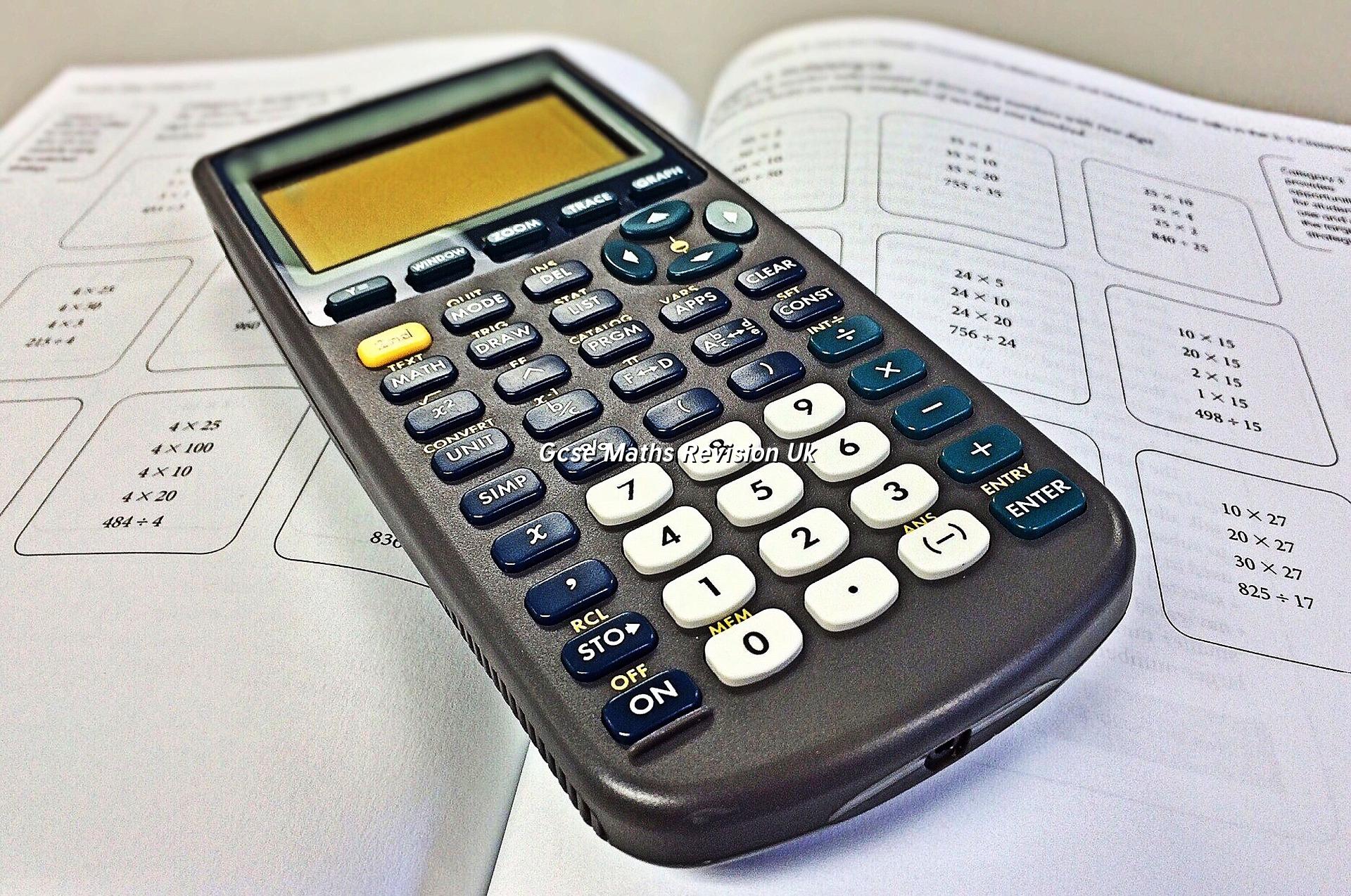
GCSE Maths Revision UK
GCSE maths revision UK students need isn't about doing fifty random questions and hoping for the best. It works better when the revision is tidy, exam-focused, and built around the actual paper structure. We help students across the UK get clearer on the topics that keep coming back: algebra, ratios, graphs, geometry, and problem solving.
At U CAN Math Academy, we teach GCSE maths online, one-on-one, so your child gets the space to ask questions without feeling rushed. That matters more than people think. In our experience, a student who can explain where they got stuck on one Edexcel question often makes steadier progress than someone who has been staring at a workbook for two hours.
What UK students usually need from revision
Most families who contact us for GCSE maths revision UK support are dealing with the same thing: the student has covered the syllabus, but the exam still feels messy. They may know the topic names, yet they freeze when a question mixes topics together. That is common in AQA, Edexcel, and OCR papers, especially in higher-tier questions where the wording changes the method.
Good revision is part memory, part timing, and part confidence. A student revising for Foundation needs a different rhythm from a student aiming for Higher, and that difference shows up fast when we start working through past papers. We look at mark schemes, question wording, and the small habits that cost marks, like missing units, rushing a method, or leaving an answer without checking.
The topics that deserve repeat practice
Algebra usually needs the most repetition because it appears everywhere. Linear equations, expanding brackets, factorising, sequences, and simultaneous equations can all show up inside bigger questions. Fractions, percentages, ratio, and proportional reasoning also need careful revision because students often know the rule but not when to use it.
Why past papers matter so much
Past papers are useful, but only if the student checks the working properly. We often see pupils in Year 10 or Year 11 who can answer a topic sheet, then lose marks on a full paper because they miss a step or misread the command word. In live revision, we pause on those moments, fix the habit, and then redo a similar question straight away.
- Use topic clusters: revise algebra with graphs, and ratio with percentages, so the brain learns how topics connect in exam questions.
- Work from the specification: match practice to AQA, Edexcel, or OCR content instead of revising every topic equally.
- Mark every mistake: keep a short error list for things like sign errors, calculator slips, and wrong units.
- Redo questions after two days: if a method disappears after a single lesson, it has not settled yet.
A simple way to revise without wasting time
When we build a GCSE maths revision UK plan, we keep it realistic. Students already have school homework, mock exam preparation, and pressure from other subjects. So the plan has to fit ordinary life, not a perfect timetable nobody can keep.
- Start with a topic check: find out which areas are secure, shaky, and forgotten. A short diagnostic conversation or a few mixed questions usually tells us enough.
- Pick the high-value topics first: algebra, ratio, fractions, geometry, graphs, and data handling tend to appear often, so they get first attention.
- Revise with worked examples: watch one method, copy one method, then try one alone. That three-step pattern works well for students in Year 11.
- Finish with timed practice: use a short paper section or a 10- to 15-minute set to build pace without turning every session into a race.
- Review mistakes the same day: a correction made while the question is still fresh tends to stick better than a vague note in a notebook.
Revision by exam board and tier
UK GCSE maths isn't identical across boards, so it helps to revise with the right paper style in mind. The content overlaps a lot, but the question feel can change. Some papers lean heavily into multi-step reasoning, while others ask for shorter, sharper applications of the same topic.
| Exam Board / Tier | Revision Focus | Typical Paper Features |
|---|---|---|
| Edexcel Foundation | Fractions, percentages, ratio, basic algebra, angles | Shorter steps, clear methods, lots of practical context |
| AQA Higher | Algebra, graphs, trigonometry, equations, problem solving | Mixed-topic questions and longer reasoning chains |
| OCR Foundation | Number, measures, geometry, simple data handling | Careful wording, steady use of core skills |
| OCR Higher | Functions, proof, advanced geometry, algebraic manipulation | More non-routine questions and extended working |
| Any UK GCSE student | Exam technique, calculator accuracy, checking answers | Marks depend on method, not just final answers |
What makes one-on-one revision different
One-on-one tuition lets us hear the student's thinking in real time. That is hard to get from a video lesson or a generic worksheet. If a student can do surds but panics with a wordy probability question, we see it immediately and deal with that exact problem instead of guessing.
Common mistakes we see before mock exams
A few mistakes show up again and again in Year 10 and Year 11. Students often forget to show working on calculation questions, especially when they think the answer is obvious. They also skip the final check on units, which costs easy marks in area, volume, speed, and standard form questions.
Another one is cramming too many new topics the night before. That usually leaves the student tired and confused, not ready. Short, repeated sessions work better, especially in the last few weeks before mocks or the real GCSE paper.
How parents can help without turning into the teacher
Parents don't need to solve the maths. What helps most is a calm routine: a fixed revision slot, a quiet place to work, and a quick look at the error list after each session. If your child is in the UK and preparing for Edexcel, AQA, OCR, or another board, you can ask them to explain one method out loud. If they can teach it back simply, they've probably understood it.
How U CAN Math Academy Can Help
We provide live online GCSE maths tuition for students across the UK, plus flexible support for families in the US, Canada, and the UAE who follow a British curriculum. Our one-on-one sessions are built around the student's current level, exam board, and the topics that need the most work, so the revision feels specific rather than random.
If you want focused GCSE maths revision UK support from Dr. Beulah Samli and our team, book a free demo class and see how we work. message us on WhatsApp or email ucanmath100@gmail.com.
Frequently Asked Questions
Ready to make revision clearer?
If GCSE maths revision has started to feel scattered, we can help you turn it into a simple plan with live support, clear explanations, and regular practice that fits the exam board.
Strong GCSE maths revision UK habits are built on small, steady wins. When students know what to revise, how to practice, and how to fix mistakes, the subject feels less foggy and much more manageable. U CAN Math Academy is here to provide that calm, one-on-one online support.