

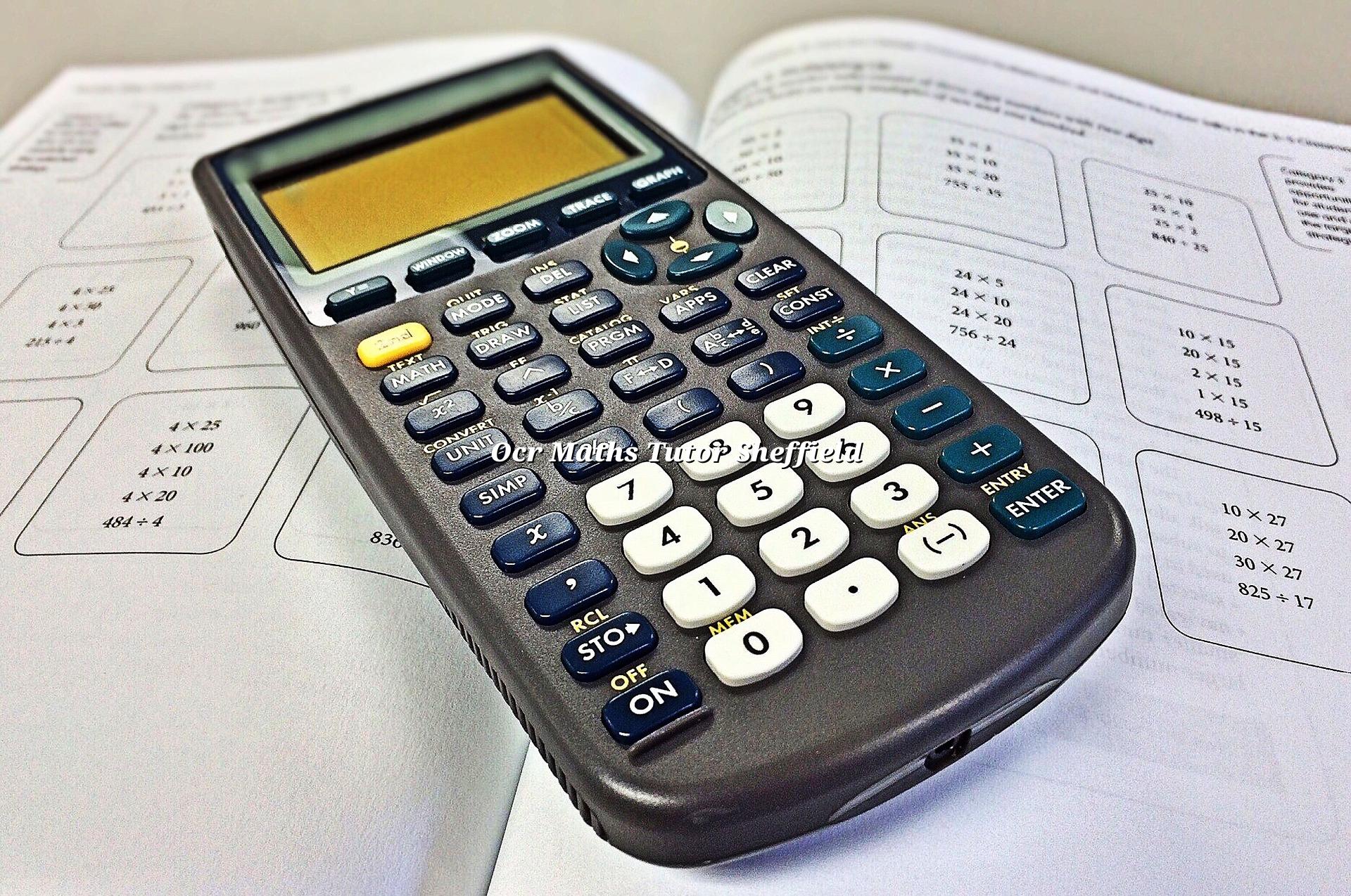
OCR Maths Tutor Sheffield
If you're searching for an OCR maths tutor Sheffield families can trust, you're usually dealing with one of two things: a student who's lost confidence, or a parent who's tired of seeing the same mistakes repeat on homework and past papers. We help with both. Our live one-on-one online lessons are built around OCR GCSE Maths, so the student gets focused attention, clear explanations, and practice that fits the exam they actually sit.
Even though we teach online, Sheffield students get the same real-time support you'd expect from a strong local tutor, with one major difference: we can work around evening lessons, weekends, and cross-time-zone schedules too. That matters for busy families, especially when Year 10 or Year 11 starts getting serious and algebra, ratio, graphs, and geometry all begin landing at once.
What OCR GCSE Maths students usually need most
OCR papers often reward calm method and clean working, not rushed guessing. In our experience, many students in Sheffield don't need more maths content at first; they need someone to slow the work down, show why a step is happening, and make the question feel less crowded. That is especially true for higher-tier learners who know the basics but lose marks on multi-step questions, units, or problem-solving under time pressure.
Paper skills that matter from the start
OCR GCSE Maths usually means building comfort with arithmetic, algebra, number, ratio, geometry, probability, and statistics. A tutor should be checking working method, calculator use, and whether the student can switch between exact and approximate answers without panicking. We spend a lot of time on past-paper style questions because that is where weak habits show up quickly.
Why one-on-one teaching works better here
Group classes move too fast for many students, and they also hide the small gaps that cause bigger trouble later. One-on-one OCR maths tuition lets us stop at the exact point where the method breaks, then rebuild it with examples that fit the student's school level. A Year 9 student in Sheffield who is still shaky on fractions needs a different lesson from a Year 11 student aiming for a strong grade in foundation or higher tier.
- Topic repair: We revisit one topic at a time, so algebra, fractions, and angles stop mixing together in the student's head.
- Exam habit building: We practise showing full working, checking answers, and spotting where marks are easy to lose.
- Confidence support: Students get a calm space to ask the question they were too embarrassed to ask in class.
- Past-paper practice: We use OCR-style questions to get the student used to the wording and the pace of real assessment.
A simple way to prepare for OCR Maths
Families often ask us what a sensible preparation routine looks like. We prefer something steady and realistic. Two shorter sessions a week often work better than one long catch-up session because the student has time to absorb the method, try the homework, and come back with proper questions rather than a blank stare.
- Check the current level: We start by seeing which topics are secure and which ones cause hesitation, usually through a short diagnostic chat or past-paper question.
- Fix the weakest foundations first: If the student misses fractions, indices, or basic algebra, we repair those before moving to harder OCR questions.
- Build topic confidence: We work through one set of related skills, such as linear graphs or percentages, until the student can explain the method back to us.
- Move into timed practice: Once the method is steady, we add exam-style questions, short timed sets, and review of common mistakes.
- Review and repeat: We keep a running note of what went wrong, then return to it in the next lesson so the same mistake doesn't keep appearing.
OCR topics, school years, and what to focus on
OCR Maths tutoring is never just about one exam paper. A good plan thinks about the student's year group, the gaps behind them, and the next half-term at school. Sheffield students often come to us after a mock result, a teacher comment about algebra, or a parent realising that revision has turned into guessing. That is normal. The table below shows how we usually shape support across GCSE stages.
| Stage | Main OCR Focus | Typical Support |
|---|---|---|
| Year 9 | Core number, algebra, ratio, and geometry basics | Build habits early before gaps become hard to fix |
| Year 10 | Topic depth, exam wording, calculator use, and mixed practice | Strengthen methods and reduce simple errors |
| Year 11 Foundation | Accuracy, key formulae, and essential problem solving | Past-paper practice, timed work, and confidence building |
| Year 11 Higher | Multi-step reasoning, algebraic manipulation, and harder applied questions | Sharper exam technique and stronger question analysis |
Online tutoring that still feels personal
Some parents worry that online means less attention. It doesn't have to. With a shared whiteboard, live explanation, and regular feedback, the lesson feels active from the first few minutes. We can watch how a student sets out their working, pause on a wrong turn, and make corrections immediately instead of waiting until the end of class.
Why Sheffield families choose live online support
It saves time, yes, but the bigger advantage is flexibility. Sheffield students can learn from home after school, then keep the same tutor during holidays, exam season, or when routines change around clubs and family travel. Because we teach across US, UK, Canada, and UAE time zones, scheduling is usually easier than people expect.
How U CAN Math Academy Can Help
At U CAN Math Academy, we teach OCR GCSE Maths in live one-on-one online sessions with Dr. Beulah Samli, Ph.D. in Mathematics. We keep the teaching clear, steady, and personal, and we adjust each lesson to the student's current level rather than forcing them through a fixed script. If you'd like to talk through your child's needs, contact us on WhatsApp or email ucanmath100@gmail.com, or book a free demo class through our contact page.
What happens in the first few lessons
We usually begin with a close look at recent classwork or an OCR paper, then we map the weak spots and set a realistic order for fixing them. That first stage matters because many students don't actually need to study everything again; they just need the right sequence. Once that order is clear, lessons feel less chaotic and revision starts to make more sense.
Frequently Asked Questions
Ready to talk about OCR Maths support?
If your child needs a calm, focused OCR maths tutor Sheffield families can rely on, we can help you get started with a free demo and a proper discussion of the next steps.
A good OCR tutor doesn't just give answers. They help the student see the structure behind the question, clear out the bad habits, and walk into the paper with a calmer head. That's the kind of support we aim to give every day at U CAN Math Academy.