

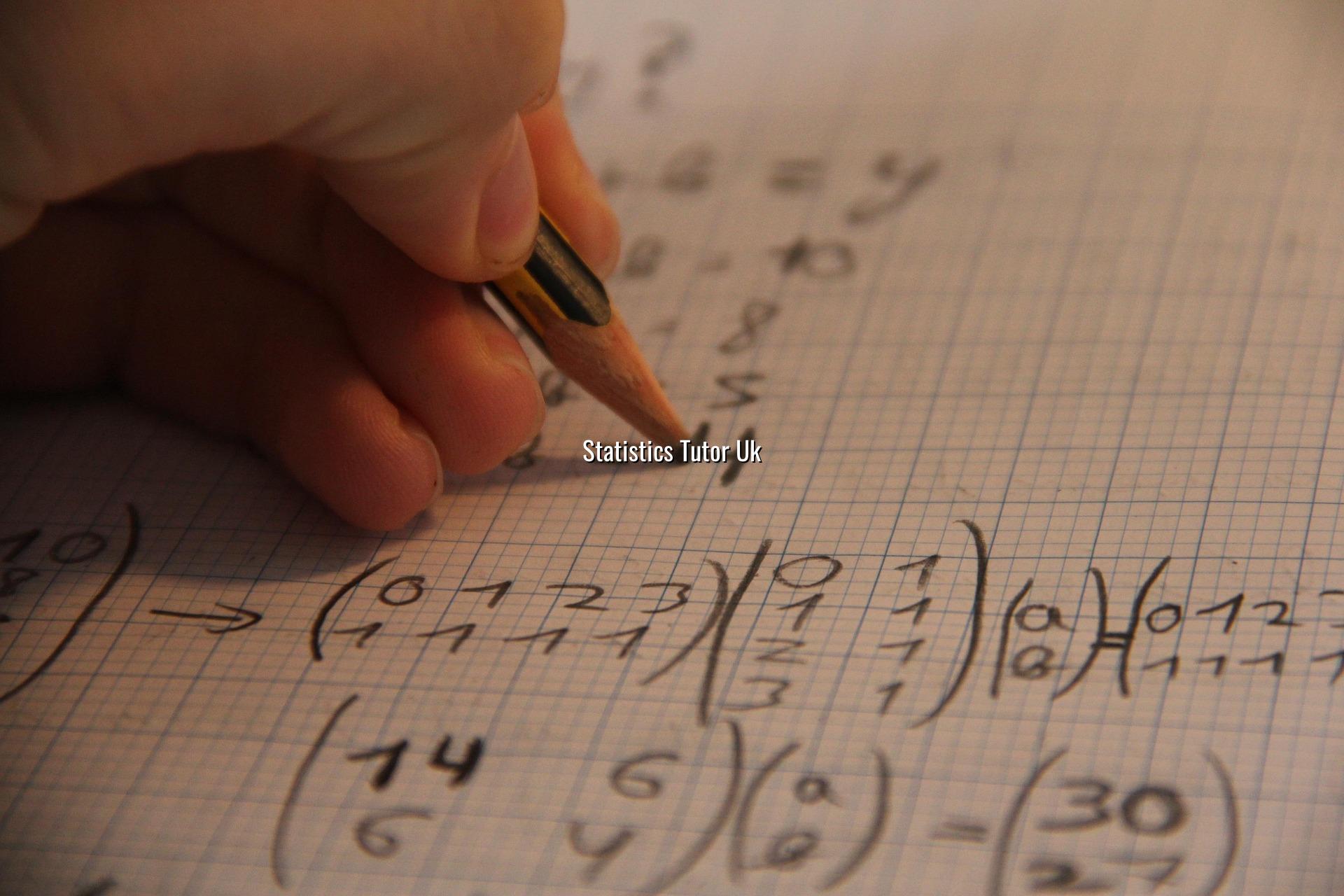
Statistics Tutor UK
If you’re searching for a statistics tutor UK students can trust, you probably need more than a quick homework fix. You need someone who can make probability, data handling, distributions, and hypothesis testing feel less like random symbols and more like a set of tools you can actually use.
We work live, one-on-one online with students across the UK, so the lesson fits your school timetable and your exam board, not the other way around. That usually means GCSE, A-Level, IB, or university-level support, with clear explanations and steady practice.
What UK students usually need help with
Most families who contact us for statistics support are dealing with one of a few familiar problems. The student may be fine with arithmetic but stuck when a question asks for interpretation, comparison, or justification. Sometimes the issue is a single topic like cumulative frequency; other times it’s the whole feeling of staring at a paper from Edexcel, AQA, or OCR and not knowing where to begin.
Statistics also rewards small habits. A student who checks units, labels axes properly, and reads the wording carefully often does better than someone who tries to memorise every formula without practice. That’s why we focus on method, not just answers.
GCSE statistics: the basics that keep coming back
At GCSE level, the same ideas show up in different forms: averages, charts, scatter graphs, probability, and interpreting data in context. Many Year 10 and Year 11 students in the UK can calculate a mean, then lose marks because they miss what the question is really asking. We slow that down and show them how marks are actually awarded.
A-Level work needs a different pace
A-Level statistics usually brings a more formal style, and the notation can trip students up quickly. Topics such as hypothesis tests, conditional probability, sampling methods, and the normal distribution need careful explanation. One small gap early on can make a whole chapter feel messy, so we often rebuild the topic from the first idea instead of rushing ahead.
- Check the exam board: we start with the exact syllabus, such as GCSE maths statistics content or A-Level material from AQA, Edexcel, or OCR.
- Find the weak point: we look at where the student loses marks, whether that’s formulas, interpretation, or exam wording.
- Teach the method live: in the session, we solve a few questions step by step on a shared whiteboard.
- Set focused practice: we give homework that matches the same skill so the student can try it again without guessing.
- Review and adjust: we use the next lesson to correct mistakes and move to the next topic only when the current one makes sense.
Why statistics feels harder than pure maths
Pure maths often has one right method hidden in the question. Statistics is messier. The answer can depend on context, wording, and whether the student understands what a result means in real life. A box plot in a textbook is one thing; a box plot in an exam question about house prices or cricket scores is another.
That difference matters because UK exams often test reading as much as calculating. If a student can compute an interquartile range but cannot explain what it says about spread, marks slip away. We see that pattern a lot with Year 11 students preparing for mock exams and sixth form students trying to improve consistency before the final papers.
| Level | Typical Topics | What We Focus On |
|---|---|---|
| GCSE | Averages, probability, charts, scatter graphs, cumulative frequency | Core methods, exam wording, and full working |
| A-Level | Distributions, hypothesis testing, conditional probability, sampling | Notation, reasoning, and exam technique |
| IB | Data interpretation, statistical tests, analysis of real-world datasets | Clear structure and accurate statistical language |
| University | Probability distributions, inference, regression, applied statistics | Conceptual understanding and worked examples |
How we teach statistics online
Our lessons are live and interactive on Zoom, Google Meet, or Microsoft Teams. Students can ask questions while we work, and we use a shared digital whiteboard so nothing gets lost in a long explanation. That setup works well for UK families because it fits after-school sessions, weekend revision, and evening study slots across different time zones.
We also keep the rhythm simple. We explain a topic, work through exam-style questions, then ask the student to try one on their own while we watch the steps. If they make a mistake, we deal with it right away. That small correction at the right moment saves a lot of confusion later.
A few habits that make a real difference
- Write down what the question is asking before calculating anything.
- Label every axis, unit, and statistical symbol clearly.
- Check whether the exam wants a value, a comparison, or an explanation.
- Use the mark scheme style: working, reason, final answer.
- Practise with questions from your own board, not random worksheets.
How U CAN Math Academy Can Help
If you need a statistics tutor UK families can speak to online, we can help with school statistics, A-Level revision, IB support, and even university topics that feel a bit rusty after a break. Dr. Beulah Samli leads the teaching, and every session is one-on-one, so the pace stays with the student. If you want to see how we work, book a free demo class and contact us on WhatsApp or by email at ucanmath100@gmail.com.
We’re used to helping students who are nervous at the start. Once they see the method clearly, the subject usually feels far less noisy.
Frequently Asked Questions
Need Help Turning Statistics Into Something Clear?
Book a free demo class and we’ll look at the exact topic, paper, or assignment you’re working on. One good session can make the next chapter feel much easier.
When statistics starts to click, students usually become calmer in every other part of maths too. That’s the part we like most: seeing a topic that once felt slippery turn into something usable.