

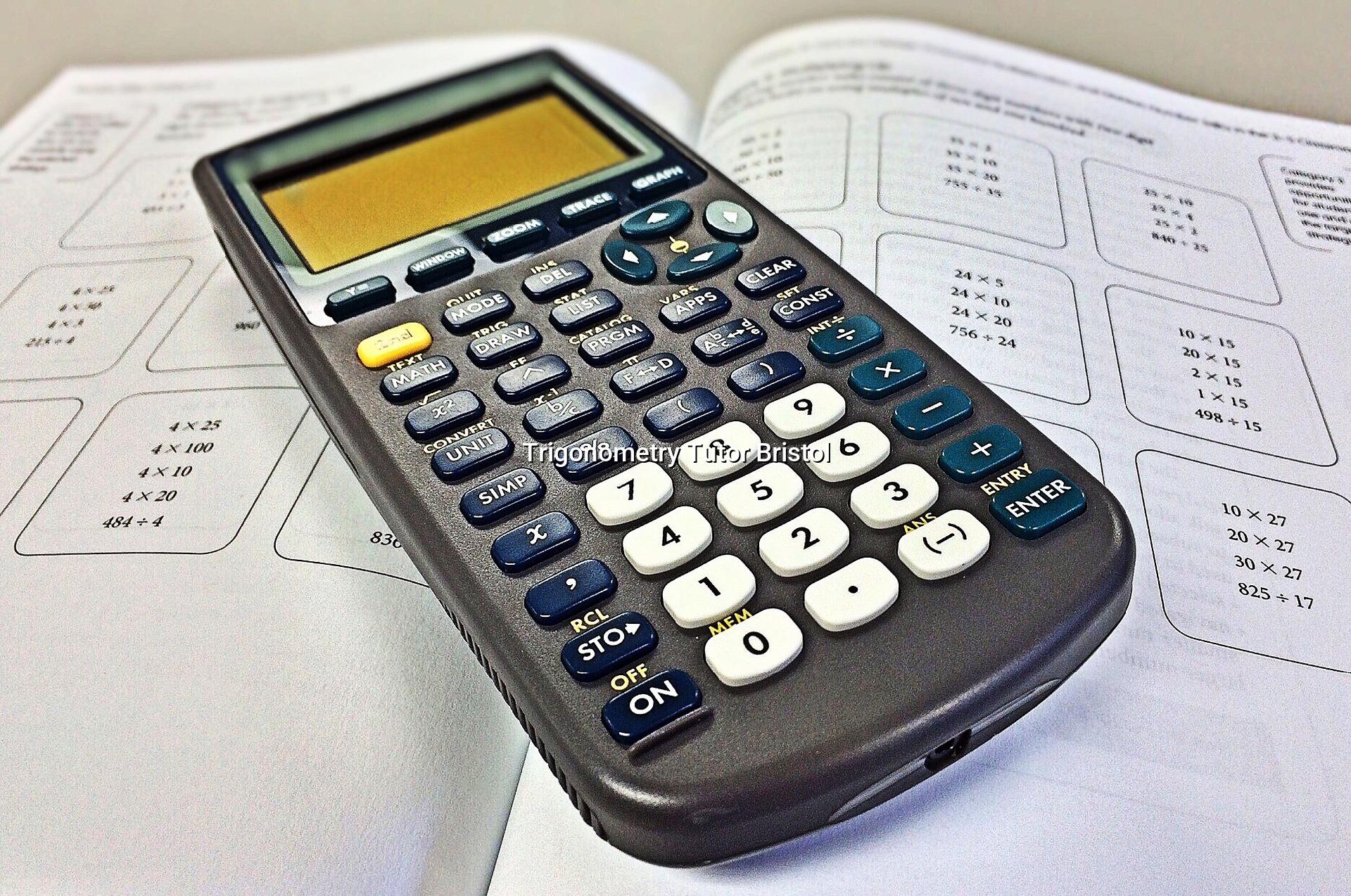
Trigonometry Tutor Bristol
If you’re searching for a trigonometry tutor Bristol, you probably already know the pain points: sine and cosine feel familiar in class, then the exam paper changes the format and everything looks different. We help students make sense of the topic in live one-on-one online lessons, so the rules, graphs, and exam questions start to feel connected instead of random.
At U CAN Math Academy, we work with GCSE, A-Level, IB, and IGCSE learners from Bristol and beyond, all online. That means you can get focused support from home, around school hours, and across UK time zones without wasting time on group classes that move too fast or too slow.
Why trigonometry feels harder than it should
Most students first meet trigonometry through right-angled triangles, then the subject quickly expands into graphs, radians, identities, and proof-style questions. That jump is where confidence often drops. A learner who can calculate a missing side may still freeze when asked to rearrange an equation, read a sine graph, or use exact values like 30°, 45°, and 60° in an unfamiliar layout.
In Bristol schools, we often see the same pattern in Year 10, Year 11, and lower-sixth work: students remember formulas, but they don’t know which one to choose or why. The problem usually isn’t ability. It’s that trigonometry is taught in pieces, so the topic never gets stitched together properly.
The points students usually miss
The unit circle, reciprocal ratios, and graph transformations are common weak spots. A lot of learners also mix up degrees and radians or forget that a graph question may be testing interpretation more than calculation. Once we spot the gap, we can slow the pace and rebuild the topic from the exact step that went missing.
Exam boards change the style, not the maths
For GCSE students, trigonometry may appear in Edexcel, AQA, or OCR papers with slightly different wording, but the core thinking stays the same. A-Level students in Bristol face a deeper layer: identities, proofs, inverse trig functions, and calculus-linked applications. We keep the focus on understanding the structure of the question, because that’s what gets tested again and again.
- Right-angled triangle work: SOHCAHTOA, missing sides, missing angles, and checking whether a calculator is set to degrees.
- Graphs and functions: reading amplitude, period, and shifts on sine and cosine graphs.
- Exact values and identities: simplifying expressions using standard values and trig identities.
- Exam technique: spotting command words, showing steps clearly, and avoiding the usual slip-ups under time pressure.
What a strong trigonometry foundation should include
A solid foundation means the student can move from one representation to another without panic. They should know the triangle view, the graph view, and the algebra view. When those three are linked, the topic stops feeling like three separate chapters. It becomes one toolkit.
We usually build that toolkit in a very practical order. First comes the language of ratios. Then comes angle measure. After that, we move into graphs, exact values, and the identities that appear in higher-level work. For many students, the turning point is the first time they see why a graph like y = sin x behaves the way it does.
- Check the starting point: we identify whether the student is weak on basics, graphs, or exam questions.
- Rebuild the core rules: we review sine, cosine, and tangent, then make sure calculator use is correct.
- Connect to visuals: we use diagrams and a shared whiteboard to link formulas to shapes and graphs.
- Practise mixed questions: we move into real GCSE or A-Level style problems so the student can choose methods on their own.
- Review mistakes carefully: we look at every wrong answer and fix the exact point where the reasoning broke down.
GCSE, A-Level, and IB trigonometry in one view
Families often ask how the topic changes by level. The short answer is that the same ideas appear, but the depth changes a lot. GCSE is usually about right-angled triangles, graphs, and standard identities. A-Level pushes into proof, advanced algebra, radian measure, and more demanding applications. IB students may also need careful work on functions and modelling, especially in higher-level maths papers.
| Level | Main Trigonometry Focus | Typical Support Needed |
|---|---|---|
| GCSE | SOHCAHTOA, bearings, angle problems, simple graphs | Getting the right formula, using a calculator properly, setting out answers clearly |
| IGCSE | Triangle ratios, graph interpretation, exact values, mixed exam questions | Recognising question styles and handling multi-step problems |
| A-Level | Trig identities, equations, proofs, radians, transformations | Working accurately with algebra and showing clear logical steps |
| IB MYP/DP | Functions, graphs, applications, modelling, trigonometric equations | Linking concepts across chapters and writing strong method-based solutions |
Why live online support works well
Trigonometry is easier to teach when a tutor can watch the student work step by step. In a live session, we can pause at the exact line where the mistake happens, ask one direct question, and correct the reasoning before bad habits settle in. That’s much better than sending a worksheet and hoping the issue sorts itself out later.
How we teach the topic without overload
Our lessons are concept-based and interactive. We use a digital whiteboard, talk through each idea, and keep the pace flexible. A student in Bristol can meet us after school, while another joining from the UAE can book a slot that fits a different time zone. The lesson still feels personal. That matters, because trigonometry mistakes are often small, and small mistakes are easiest to fix when someone is watching closely.
We also use homework and short checks between sessions. Not long, busywork-style assignments. Just enough practice to show whether the student can repeat the method on their own the next time. Parents often tell us that what they value most is clarity: they want to know what was covered, what still needs work, and where the student is now getting stuck.
A few things we focus on in each lesson
We keep the session anchored to the student’s actual classwork. If they’re preparing for a mock exam, we use mock-style questions. If they’re confused by a school worksheet, we work through that worksheet line by line. That way the lesson feels relevant, not generic.
| Skill | What the student learns | Why it matters in exams |
|---|---|---|
| Calculator settings | Choosing degrees or radians correctly | Prevents avoidable errors in every paper |
| Graph reading | Finding amplitude, period, and shifts | Helps with interpretation and sketching questions |
| Equation solving | Rearranging trig equations carefully | Useful for higher-mark problems and proofs |
| Exact values | Using standard values without guesswork | Supports accuracy in GCSE and A-Level papers |
How U CAN Math Academy Can Help
If you need a trigonometry tutor Bristol students can work with online, we can help you make the topic clearer one step at a time. Dr. Beulah Samli leads our one-on-one sessions, and we tailor each lesson to the student’s level, exam board, and school pace. If you’d like to talk about GCSE, A-Level, IB, or IGCSE support, reach out for a free demo class on WhatsApp or by email at ucanmath100@gmail.com.
Frequently Asked Questions
Ready to Get Trigonometry Clear?
Book a free demo and see how a live one-on-one session can make the next worksheet or revision paper feel more manageable.
Trigonometry gets much easier once the student sees the logic behind the formulas. With the right support, they can stop guessing and start recognising patterns across triangles, graphs, and equations. That’s the kind of progress we like to build at U CAN Math Academy, where online one-on-one teaching keeps the focus exactly where it should be: on the student.