

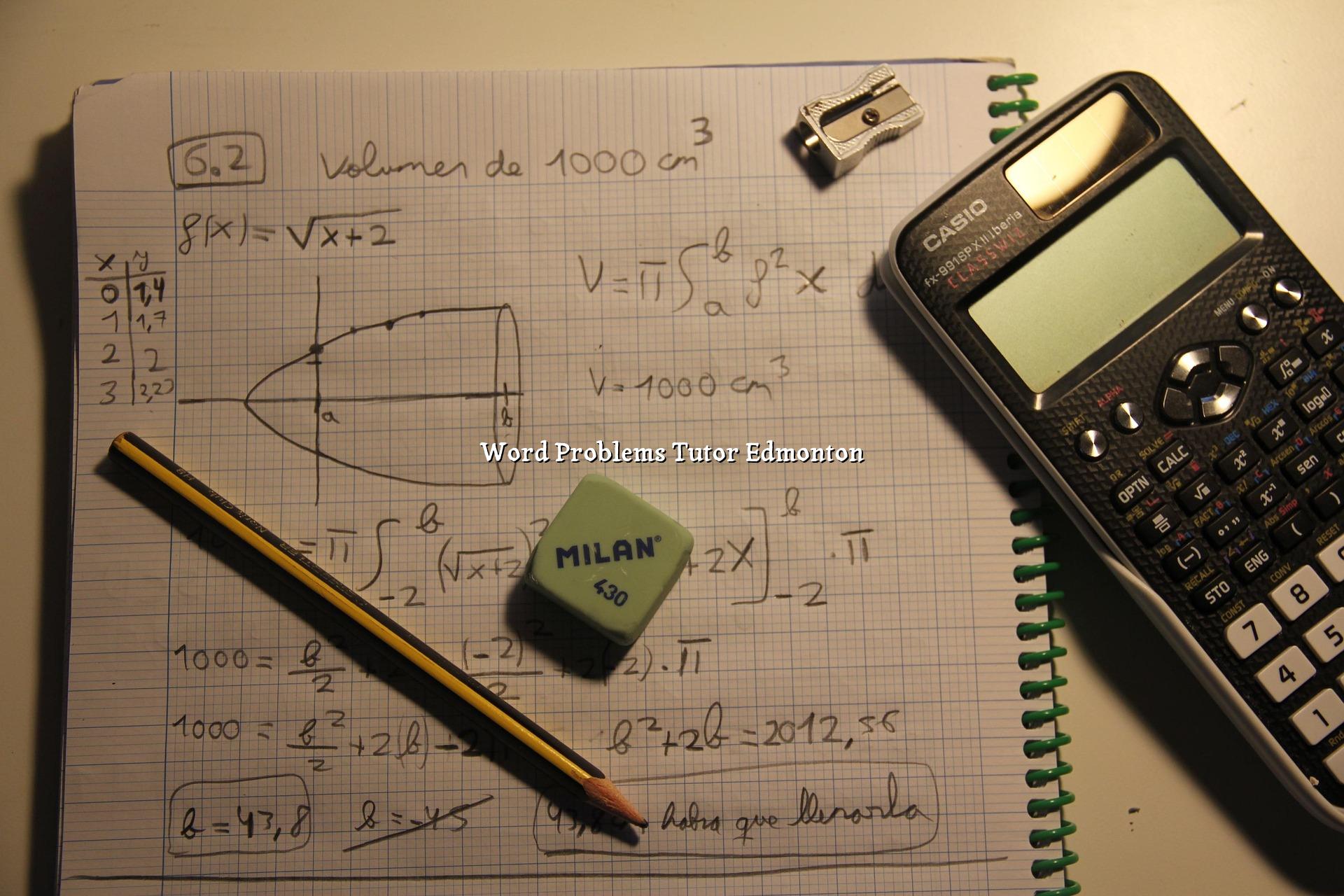
Word Problems Tutor Edmonton
If you’re searching for a word problems tutor Edmonton families can trust, you probably want more than just answers. You want someone who can show the thinking behind the question, slow it down, and make your child feel less stuck when a math page looks crowded or tricky.
That’s exactly where our live online one-on-one lessons help. We work with students who freeze at the wording, miss key clues, or know the math but lose marks because they don’t set the problem up cleanly. With Dr. Beulah Samli, Ph.D. in Mathematics, we keep the focus on clear reading, sound reasoning, and steady practice.
Why word problems feel harder than regular math
A lot of students in Edmonton can do the calculation once the numbers are on the page. The trouble starts earlier, with the language. A question about age, speed, interest, mixture, or area may hide the real operation, and that’s where marks get lost. In our sessions, we teach students to spot what is being asked before they reach for a calculator or start guessing.
This comes up in Alberta classrooms from upper elementary through high school, especially around fractions, ratios, algebra, and percent applications. We also see it in Grade 9 PAT-style practice, Math 20-1 and Math 20-2 prep, and SAT or ACT-style questions for families comparing curricula. The content changes, but the struggle is often the same: translating words into math without rushing.
What students usually miss first
Most students don’t miss the final arithmetic first. They miss the setup. Maybe they skip the unit, ignore the phrase “in total,” or don’t notice that a question wants an estimate rather than an exact value. Once that happens, the whole solution drifts off track.
How we train the reading part
We read the problem out loud together, underline the numbers, circle the question, and talk through the wording in plain language. Then we build the math line by line. That habit sounds simple, but it changes how students approach every new question. Parents often tell us that their child starts pausing before writing, which is a good thing.
- Read twice: first for the story, then for the numbers and units.
- Mark the question: circle exactly what the problem asks for, not what looks important.
- Choose the operation: decide whether the situation needs add, subtract, multiply, divide, or a formula.
- Write the equation: turn the sentence into symbols before solving.
- Check the answer: see if it makes sense in the story and matches the units.
A practical way to get better at word problems
There isn’t a magic trick. Students improve when they use the same method again and again until it feels natural. We usually begin with shorter questions, then move to mixed-step problems that combine fractions, percentages, and algebra. For Edmonton learners in Grades 6 to 12, that steady progression tends to work better than jumping straight into hard test papers.
One thing we push from day one is clear working. If a student writes down the equation, labels the units, and keeps the steps tidy, they’re less likely to lose marks for avoidable mistakes. It’s a habit, not a talent.
| Level | Word Problem Focus | Typical Topics |
|---|---|---|
| Grade 6–8 | Building confidence with reading and operations | Fractions, ratios, decimals, perimeter, simple rates |
| Grade 9 | Translating text into equations and graphs | Linear relationships, percent change, algebraic expressions |
| Math 20-1 / 20-2 | Multi-step reasoning and exam practice | Quadratics, systems, finance, trigonometry applications |
| SAT / ACT Math | Fast reading with careful setup | Rates, proportions, geometry stories, data interpretation |
The mistakes that keep coming back
A few patterns show up all the time. Students read “each” and forget that it signals multiplication. They see a total and divide too early. They answer the question they expected rather than the one actually printed. We fix those habits by using short practice sets and talking through the logic out loud, not by racing through more pages.
Common word problem types we cover
Word problems are not one single skill. They spread across money, time, motion, geometry, data, and algebra. In Edmonton schools, that means a student might face a bus schedule question one day and a rectangle fencing problem the next. Both need the same careful reading, but the maths behind them changes.
- Ratio and proportion questions: useful for recipes, map scales, and mixture problems.
- Percent and money problems: common in sales tax, discounts, interest, and budgeting tasks.
- Rate and distance questions: often tied to speed, travel time, or unit conversion.
- Algebra story problems: helpful for unknown numbers, age problems, and consecutive integers.
- Geometry applications: include perimeter, area, volume, and composite figures.
How sessions work online
Our lessons are live and one-on-one, so the student gets direct feedback while solving. We use Zoom, Google Meet, or Microsoft Teams with a shared digital whiteboard, which makes it easy to write equations, sketch diagrams, and correct mistakes in real time. If a learner is in Edmonton, Calgary, London, or Dubai, we simply choose a slot that fits the time zone.
That flexibility matters more than many families expect. A Grade 8 student may need evening help after school, while a high school student might want a weekend session before a test. Since everything is online, the lesson can stay focused on the math instead of travel or fixed local scheduling.
What a good session usually looks like
We begin with one problem, not ten. Then we identify the clue words, choose a method, and talk through the steps. After that, we switch the numbers or the wording so the student sees the structure, not just a memorized answer. That’s where confidence starts to build.
How U CAN Math Academy Can Help
If your child needs a word problems tutor Edmonton parents can actually rely on, we’re ready to help with calm, focused instruction. We teach school math, SAT and ACT preparation, and higher-level mathematics through live one-on-one lessons, always with the student’s current classwork in mind.
You can reach us at Chat on WhatsApp or ucanmath100@gmail.com to ask about a free demo class. A short trial session is often the easiest way to see how our approach works for your learner.
Frequently Asked Questions
Ready to make word problems feel manageable?
Book a free demo class and see how live one-on-one teaching can turn a confusing page into a clear method.
Once a student learns how to read the problem first, the rest gets easier to manage. That habit carries into class tests, homework, and bigger exam questions, which is why so many families look for a word problems tutor Edmonton students can meet online without the extra stress of travel. If you want that kind of support, U CAN Math Academy is ready to start with a free demo.