

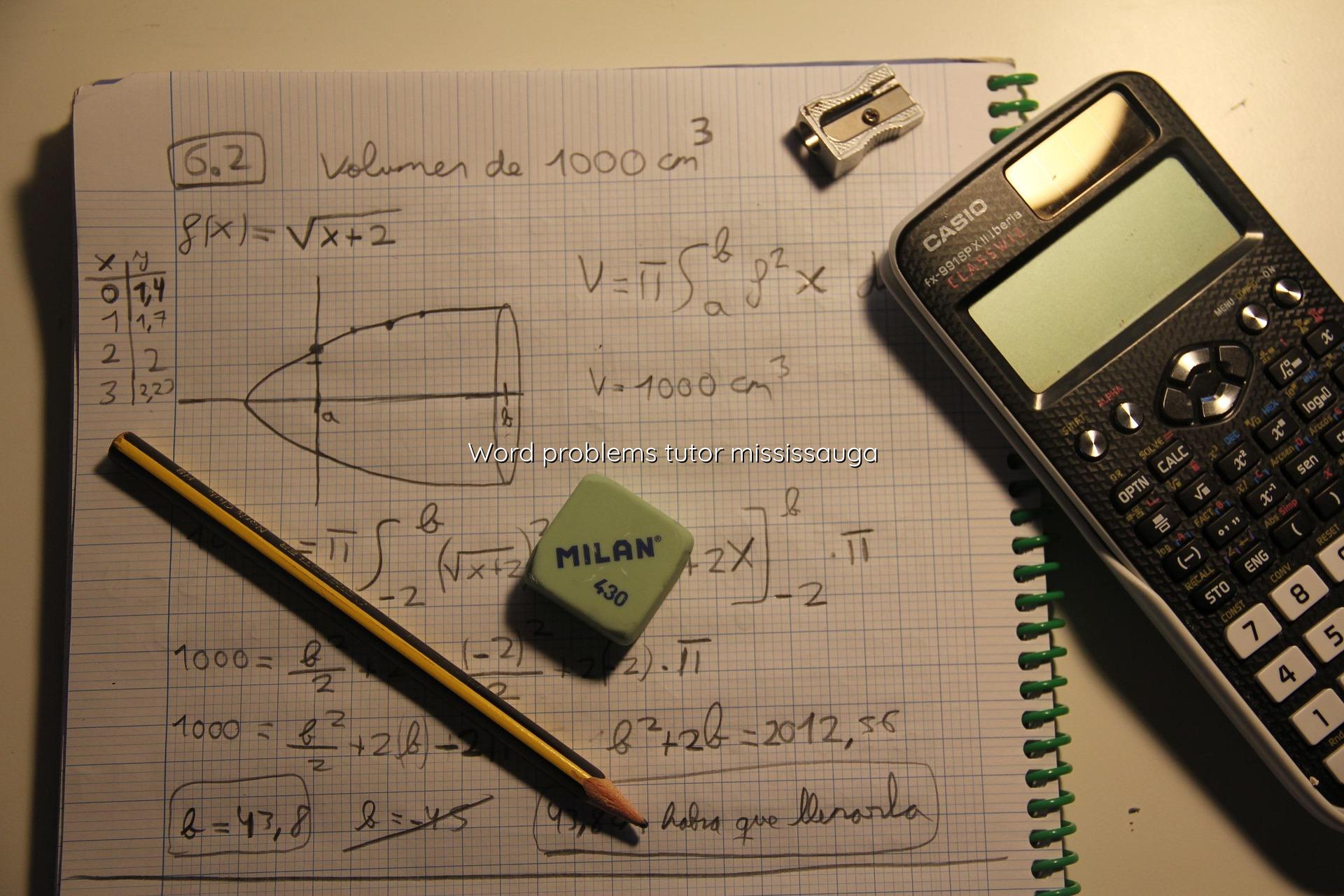
Word Problems Tutor Mississauga
If you're searching for a word problems tutor Mississauga families can trust, you're probably dealing with the same thing we hear every week: the math itself may be familiar, but the reading turns the page into a puzzle. A student sees fractions, percentages, or distance questions and then freezes before the first calculation. We help by breaking the language, the structure, and the math apart so the problem starts making sense.
At U CAN Math Academy, we teach live one-on-one online lessons, so your child gets focused help from Dr. Beulah Samli without the noise of a crowded class. Many students in Grade 6, Grade 7, Grade 8, and high school need that extra minute to spot what the question is really asking. That's where our work begins.
Why word problems feel harder than regular math
A worksheet full of equations can look calmer than a single story problem. That's because word problems test more than calculation. They ask students to read carefully, sort out which numbers matter, choose an operation, and keep track of units, diagrams, and wording that can easily distract them. In Ontario classrooms, and in Mississauga schools that follow the provincial curriculum, this shows up everywhere from ratio questions in middle school to quadratic modelling later on.
We've seen students who can do arithmetic quickly still miss marks because they rush the first two lines of the question. One missed word like "each," "altogether," or "difference" can change the whole answer. A good tutor slows that process down without making it feel scary.
What students usually get stuck on
Most of the time, the challenge isn't the final step. It's choosing the right plan. Some students don't know where to start, while others jump straight into calculation and skip the meaning. That's why we read the question together, underline key information, and talk through what the problem is actually asking in plain language.
The reading side matters too
Word problems bring reading comprehension into math class. A question about train travel, sharing pizza, calculating tax, or comparing ticket prices can include extra details that are there only to test attention. We teach students to separate useful information from filler so they don't treat every number as important.
How we teach students to solve them
Our method is steady and practical. We don't ask students to memorize a pile of tricks and hope for the best. Instead, we teach a repeatable process they can use on homework, quizzes, and exams. That matters for Ontario math, but it also helps with SSAT-style questions, common entrance practice, and school tasks where the wording is longer than the calculation.
- Read once for the story: Get the setting first. Is it money, time, distance, sharing, or measurement?
- Read again for the numbers: Circle the values, units, and comparison words like "more than," "less than," or "in total."
- Decide the operation: Choose add, subtract, multiply, divide, or a combination based on the situation.
- Write the equation before calculating: This keeps the student from guessing and makes mistakes easier to spot.
- Check the answer against the question: The final number should make sense in the story and use the correct units.
We repeat this process with simple examples first, then move into multi-step questions. A Grade 6 student might work on shopping and elapsed-time problems, while a Grade 10 student may tackle systems of equations in a real-life setting. The structure stays the same, which gives students something solid to hold onto.
Topics we cover in one-on-one sessions
A strong word problems tutor Mississauga students need should be comfortable with both the curriculum and the language of math. We work across Ontario school topics, and we also help students who are preparing for IB, IGCSE, or other international tracks. The goal is always the same: help the student understand the question fast enough to use their math cleanly.
| Topic Area | What Students Practice | Typical School Use |
|---|---|---|
| Fractions and ratios | Part-whole thinking, equivalent ratios, comparison language | Grade 6 to Grade 9 homework and quizzes |
| Percent and money problems | Discounts, tax, tips, interest, percentage change | Daily-life questions and applied math tasks |
| Algebra word problems | Translating sentences into equations and inequalities | Pre-algebra, Grade 8, Grade 9, and high school math |
| Time, distance, and rate | Speed, travel time, unit conversion, multi-step reasoning | Middle school and secondary school problem sets |
| Geometry applications | Perimeter, area, volume, scale, measurement vocabulary | Class assignments, tests, and review sheets |
A few habits that change the result
- Underline the question: Students often solve the problem they expected, not the one on the page.
- Use a small sketch: A bar model, number line, or quick diagram can make the situation clearer in seconds.
- Say the question out loud: Hearing the words helps some students notice hidden clues.
- Keep units with numbers: Minutes, dollars, kilograms, and kilometres should never get separated from the value.
- Check reasonableness: If a snack costs $200 or a trip takes 2 minutes across the city, something went wrong.
Word problems and Mississauga school expectations
Families often reach out because a teacher has said the student "knows the material" but still loses marks on written questions. That's a real pattern. In Ontario, students are expected to show thinking, not just answers, and that means a child has to explain steps with clarity. Mississauga students in public, Catholic, private, and international schools all face this pressure in slightly different ways, but the skill set is the same.
We also see older students who are preparing for math pathways that include functions, advanced algebra, or science-related problem solving. A student in Grade 11 might understand formulas yet struggle when a physics-style or finance-style question shows up in class. The fix is usually not more random practice. It's better reading, better setup, and a calmer way to work through the steps.
How parents know it's time for help
When homework takes much longer than it should, when your child keeps asking, "What do they mean?", or when test marks drop only on worded questions, tutoring can help. Some parents tell us their child rushes, others say the child is slow because they're trying to understand every sentence. Both situations can improve with regular guided practice and feedback.
How U CAN Math Academy Can Help
We work one-on-one, live online, and we keep the lesson focused on your child's actual schoolwork. That means we can use current class notes, homework, or test review sheets and show the student how to approach each question with less stress. If you need a word problems tutor Mississauga parents can contact from anywhere in the city or beyond, we're ready to help.
Call us at Chat on WhatsApp or email ucanmath100@gmail.com to book a free demo class and talk about what your child is working on right now.
Frequently Asked Questions
Start with a free demo
If your child keeps missing marks on story questions, we'll help them slow down, spot the math, and work with more confidence.
Good word-problem work is learnable. Once the student knows how to read the question, separate the clues, and build the equation step by step, the page feels a lot less intimidating. That's the kind of progress we like to see, and it's the reason many families look for a word problems tutor Mississauga students can meet online with ease.