

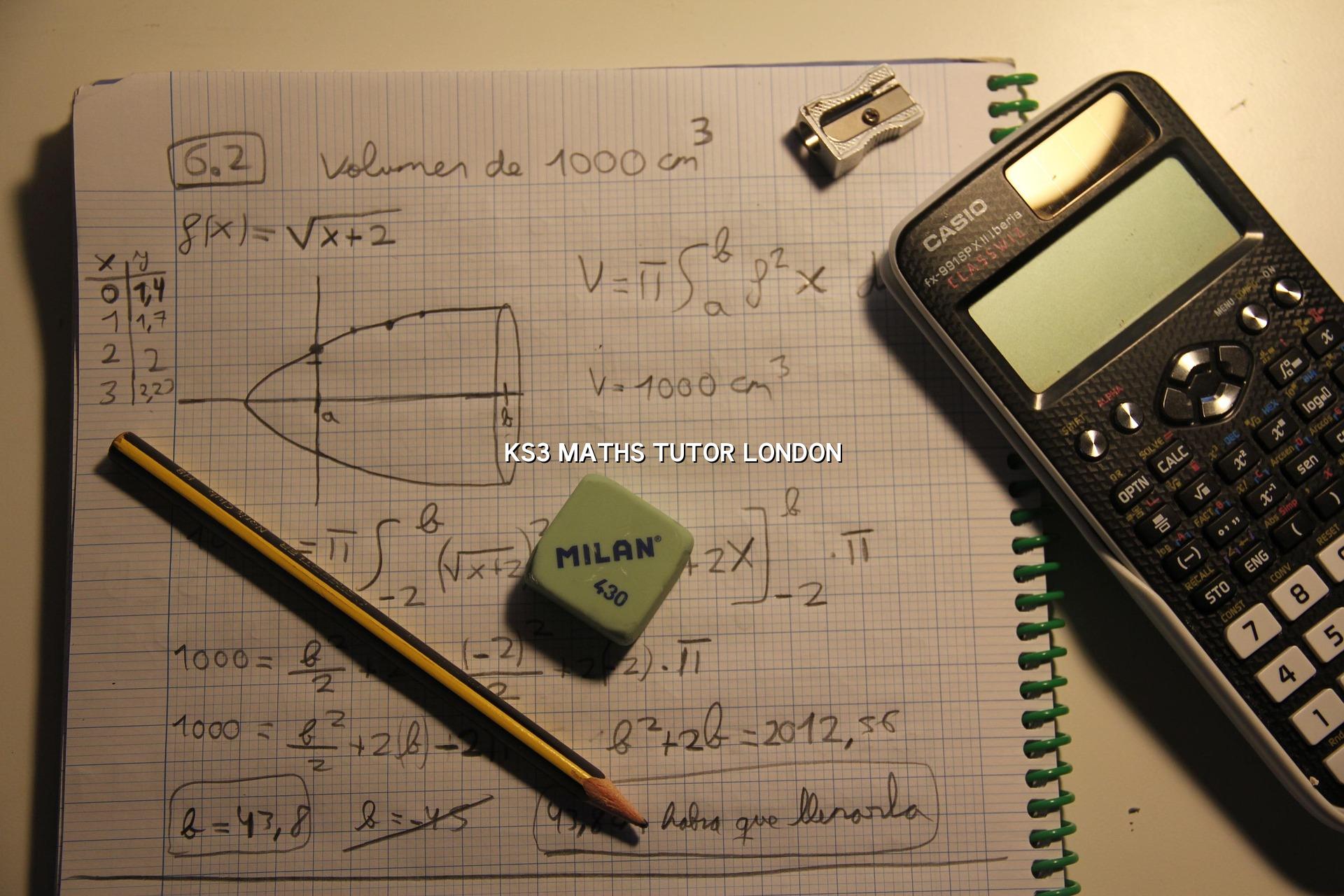
KS3 Maths Tutor London
If you’re searching for a KS3 maths tutor London families can trust, you probably want steady help with the topics that start to feel harder in Year 7, Year 8, and Year 9. We work online, one-on-one, so your child gets real attention on the exact gaps that are slowing them down.
Most parents who contact us mention algebra, fractions, ratios, or confidence. That’s usually where KS3 work changes from simple practice to real understanding, and it’s where a calm, focused tutor makes a difference.
What KS3 maths really asks of students
KS3 maths is more than revision sheets and weekly homework. In England, it covers Year 7 to Year 9, and students are expected to handle arithmetic fluently, read word problems carefully, and explain their working with enough clarity that the answer makes sense to someone else. That shift catches a lot of bright children off guard.
We see the same pattern again and again. A student can do fine with basic calculation, then struggle once topics like linear sequences, perimeter and area, percentages, and graphs appear together in one question. A good KS3 maths tutor London parents can rely on should spot that pattern quickly and work on it step by step.
Year 7, Year 8, and Year 9 are not the same
Year 7 is often about settling in and building secure habits. By Year 8, the pace rises. Year 9 usually brings tougher reasoning, richer problem solving, and a clearer link to GCSE-style thinking. If a student is missing a small idea in Year 7, it can show up again in Year 9 as a much bigger problem.
Common trouble spots we hear about
Parents often tell us that their child “knows it in class but forgets it at home.” That usually means the method hasn’t stuck yet. Fractions, negative numbers, algebraic expressions, angles in parallel lines, and data interpretation are regular pressure points, especially when school worksheets move too quickly.
- Check the exact topic: We start by finding out which KS3 units need attention, from fractions and decimals to straight-line graphs or probability.
- Look at the working: We ask the student to show how they reached an answer, because the method matters as much as the result.
- Fix one gap at a time: Instead of jumping around, we deal with the missing idea first so later work feels less messy.
- Practice with feedback: The student works through examples live on Zoom, Google Meet, or Microsoft Teams, and we correct mistakes as they happen.
- Revisit and assess: We return to the same skill after a short break, which is often when confidence starts to show.
Why London families often look for online KS3 support
London families are busy. Travel can be tiring, after-school clubs fill the week, and some students are already juggling music, sport, or additional language classes. Online support removes that extra commute and makes it easier to keep a regular rhythm.
There’s another reason too. London schools are varied. A student in Greenwich, Ealing, Croydon, or Islington may all be working toward the same national curriculum, but the pace and style of teaching can feel very different from one school to the next. One-on-one tutoring lets us respond to the child in front of us, not to a class average.
| KS3 Year | Typical Focus | What We Work On Online |
|---|---|---|
| Year 7 | Core arithmetic, place value, fractions, basic algebra | Strong number sense, clean written methods, confidence with school homework |
| Year 8 | Ratios, percentages, graphs, geometry, equations | Step-by-step problem solving and mixed-topic practice |
| Year 9 | Harder reasoning, pre-GCSE foundations, multi-step questions | Exam-style thinking, accuracy under time, and clear explanations |
| Across KS3 | Homework, assessments, and topic reviews | Targeted lessons, regular feedback, and a steady plan for each student |
How we build confidence without rushing
Maths confidence usually grows in small moments. A child gets one question right without help, then another, then starts checking their own work instead of waiting for someone else to confirm it. That’s the point where the subject feels less threatening.
In our lessons, we keep the whiteboard active, ask short questions, and use examples that match the student’s school level. If a Year 8 pupil is stuck on forming an equation, we won’t race ahead to a harder topic. We slow down, explain the idea in plain language, and make sure the method is usable the next day in class.
What makes one-on-one teaching useful here
Group classes can be fine for revision, but KS3 often needs personal correction. Some students need more work on times tables and fractions; others need help writing algebraic expressions without guessing. One-on-one teaching gives us room to notice the exact mistake and correct it before it becomes a habit.
Useful habits parents can encourage at home
- Ask your child to explain one method out loud, even if the answer is already correct.
- Keep school notes and homework together so topics are easier to review before a lesson.
- Use short, regular practice instead of long weekend cramming sessions.
- Check whether the error is a reading mistake, a method mistake, or a calculation mistake.
- Encourage neat working, especially for algebra and geometry questions.
KS3 topics we cover in live sessions
Our support follows the UK secondary curriculum and can be shaped around school homework, topic tests, or broader catch-up work. We help students strengthen the parts of maths that keep returning across the term, which is often the quickest way to make schoolwork feel more manageable.
If a pupil is ready for more challenge, we also stretch them with reasoning questions, multi-step tasks, and GCSE-style foundations. That matters in Year 9, when teachers begin expecting more independence and stronger explanations.
A practical look at lesson structure
A typical session begins with a quick check of recent work. Then we move into the topic itself, work through examples together, and finish with independent practice so the student can show what they’ve understood. It’s simple, but it works because the steps are clear.
How U CAN Math Academy Can Help
We provide live one-on-one online maths tutoring for KS3 students in London and across the UK, with flexible scheduling that works across family routines. Dr. Beulah Samli, Ph.D. in Mathematics, leads the academy, and she teaches with a calm, concept-based approach that helps students feel more settled with the subject.
If you want a KS3 maths tutor London families can reach easily, book a free demo class and see how we work. message us on WhatsApp or email ucanmath100@gmail.com.
A few things we focus on in every lesson
We pay attention to the student’s current school year, the board or curriculum they follow, and the pace they can genuinely handle. That means we can support UK learners who need help with KS3 homework, school assessments, or a stronger bridge into GCSE maths.
Frequently Asked Questions
Start with a free demo
If your child needs steadier KS3 support, we’re ready to help with clear lessons and one-on-one attention.
A strong KS3 maths foundation changes the whole feel of secondary school maths. With the right support, students stop guessing, start showing their working properly, and approach harder questions with less fear.
If you’re comparing options for a KS3 maths tutor London families can work with online, U CAN Math Academy is here to help. We keep things clear, personal, and focused on what your child needs next.